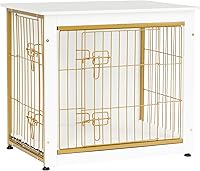
Does a Dog Crate Replace a Bed?
Yes, a dog crate can replace a bed. With a fitted pad and enough room to stand, turn and stretch out, the crate becomes your dog's sleeping space, and many dogs settle better in an enclosed den. It only replaces the bed when the crate is the right size and comfortable inside.
On this page (8 sections)
- Does a dog crate replace a bed?
- When does a crate work as a bed?
- Why do some dogs settle better in a crate than on an open bed?
- How do you turn a crate into a comfortable bed?
- What size crate do you need for it to replace a bed?
- Can a crate replace a bed for a puppy?
- When should you keep a separate dog bed?
- What else should you know before you swap?
Yes, a dog crate can replace a bed. With a fitted pad and enough room to stand, turn and stretch out, the crate becomes your dog's sleeping space, and many dogs settle better in an enclosed den.
The crate only replaces the bed when it is the right size and comfortable inside.
That is the short answer to "does dog crate replace bed," and the rest of this guide covers when it works and when it does not. A crate is furniture and bedding in one, so the pad you put in it does most of the comfort work.
Get the size and the pad right and you can skip the separate dog bed entirely.
Does a dog crate replace a bed?
Yes, for most dogs a crate replaces a bed when it fits well and has a soft pad. The crate already provides a contained sleeping area, so the only thing missing is cushioning.
A crate is a den with a floor. Add a crate pad and you have a bed with walls.
That is why crate training and sleeping often overlap: the dog learns that the crate is where rest happens. If the crate is too small, the dog cannot stretch out and the crate stops working as a bed.
The swap works best for dogs that are already comfortable in a crate. A dog that panics behind a closed door needs training first, and an open bed may suit it better in the meantime.
For the crate itself, our dog crates buyer's guide covers size, door styles and materials.
When does a crate work as a bed?
A crate works as a bed when your dog can stand, turn and lie flat inside it, and when the floor is padded. Those two conditions matter more than the crate's brand or style.
Size comes first. A crate that is just large enough for your dog's adult size gives a secure den feel without extra room for accidents.
Too much space and a puppy will soil one end and sleep at the other. Our guide to how to measure a dog for a crate shows the stand, turn and stretch test.
Cushioning comes second. A bare plastic pan or wire floor is cold and hard, so a pad is what turns the crate into a bed.
Pick a pad that fills the crate floor without bunching at the door.
Why do some dogs settle better in a crate than on an open bed?
Many dogs relax in a crate because the walls and a cover create a den-like space. That enclosed feeling can reduce pacing and help a dog switch off at night.
The crate also keeps the sleeping spot in one place. A dog that circles the room or climbs on furniture at night has a fixed place to go.
A cover over the crate adds privacy and blocks drafts.
The trade-off is confinement. A dog that likes to stretch out in the open or watch the room may sleep better on a flat bed.
Watch where your dog naps during the day for a week; that spot tells you which setup it prefers.
How do you turn a crate into a comfortable bed?
Line the crate floor with a fitted pad and add a cover if your dog likes privacy. Those two additions do most of the work, and both are easy to wash.
Start with the pad. It should sit flat across the pan and stay put when your dog steps in and out.
A pad with a non-slip bottom helps on smooth plastic pans.
Then decide on a cover. A fabric cover over the crate cuts light and drafts and gives the den feel many dogs want.
Leave the front open at first so your dog can still see out.
Keep the crate floor clear of loose toys at night. A bed should be simple: pad, maybe a cover, and nothing your dog can chew or tangle in while you sleep.
Our list of dog crate accessories worth buying covers the extras that actually help.
Which pad fits a large crate?
The Washable crate pad, 42-inch suits large breeds in a 42-inch crate. It measures about 42 x 28 inches and is cut for dogs around 70 to 90 lb, such as a Golden Retriever or Boxer.
The top is soft faux fur and the back is non-slip, so the pad stays flatter when your dog climbs in. It can go in the machine on a moderate cycle and in a low dryer or the sun.
VERZEY notes the pad is not for chewers, so a dog that shreds bedding needs a tougher cover.
Which pad fits a medium crate?
The VERZEY Dog Crate Pad Washable Dog Bed in the 36-inch size fits medium crates. It measures about 36 x 23 inches for dogs around 40 to 70 lb, such as a Beagle or Bulldog.
It uses the same soft faux fur top and non-slip back as the larger pad. Machine wash on a moderate cycle and dry low or in the sun, and it holds its shape.
Shake it out after unpacking to bring the fluff back.
What size crate do you need for it to replace a bed?
Match the crate to your dog's adult size, not its puppy size. The crate should let your dog stand without ducking, turn around, and lie stretched out.
Measure your dog's height at the shoulder and its length from chest to rump while standing. Add a little room so it can turn, then choose the nearest standard crate size.
A crate much bigger than that leaves space a puppy will use as a bathroom corner.
For a growing puppy, buy the adult-size crate and use a divider panel to shrink the sleeping area. You move the panel back as the dog grows.
This keeps one crate working as a bed through puppyhood.
Can a crate replace a bed for a puppy?
Yes, and during house training the crate is often the better bed. Puppies avoid soiling where they sleep, so a snug crate helps them hold on between bathroom trips.
The crate should be small enough that the puppy cannot pace away from an accident. Use the divider panel and size the space to the puppy's current body.
A pad that washes easily matters more at this stage than at any other.
Keep a separate bed or mat outside the crate for daytime naps. The crate stays the night and travel spot, while the open mat gives the puppy somewhere to rest during the day.
Clean the crate pad often; our guide to how to clean a dog crate covers washing pads and wiping the pan.
When should you keep a separate dog bed?
Keep a separate bed when your dog is not crate trained, or when it likes to sleep in the open. A crate replaces a bed only if the dog actually rests in it.
Skip the crate-as-bed swap for a dog that panics behind a closed door. That dog needs slow crate training first, and an open bed avoids stress in the meantime.
A dog recovering from surgery or with limited mobility may also do better on a low, open bed it can reach without stepping over a crate lip.
Some homes want both. A crate for nights and travel plus a bed in the living room is a common setup.
In that case the crate still acts as a bed, just not the only one.
What about a crate that comes with a bed?
A starter kit bundles the crate and bed together. The MidWest iCrate starter kit in the 30-inch size includes a double door iCrate, a fleece pet bed, a crate cover and two 20 oz stainless steel bowls.
The fleece bed fits inside the crate or works as a standalone bed, so you can try both setups with one purchase. The cover attaches with hook and loop tabs and adds the den feel that helps some dogs settle.
The bowls snap onto the crate and lift out for cleaning. The kit also includes a divider panel and a leak-proof pan.
This size suits medium breeds, so check your dog's measurements against it.
What else should you know before you swap?
The crate is only a bed if your dog chooses to rest in it. A pad makes the floor soft, the right size makes it safe, and a cover makes it den-like.
If those three pieces are in place, most dogs will sleep in a crate as happily as on a bed.
Try the crate as the night spot for a week. If your dog settles quickly and wakes rested, you can retire the separate bed.
If it paces or whines, go back to crate training and keep the open bed for now.
One more tip: wash the pad before first use. VERZEY says washing and drying the pad before use makes it more comfortable.
A clean pad and a quiet crate are what make the swap work. Start with the crate sizing and the pad fit, and the answer to whether a dog crate replaces a bed becomes a simple yes for your dog.
Frequently asked questions
Can a dog sleep in a crate every night?
Yes. A crate of the right size with a soft pad works as a permanent sleeping spot, and dogs that are crate trained often choose it over an open bed.
Give your dog a short break outside the crate each evening for water and a bathroom trip before the door closes.
Is a crate bed better than a flat dog bed?
It depends on your dog. A crate keeps the sleeping area contained and easier to clean, while a flat bed can go anywhere in the room.
Dogs that chew, shed heavily or get anxious in open spaces usually do better with a crate and a washable pad.
How much bigger should a crate be than the dog bed?
The crate should be just large enough for your dog to stand, turn around and lie stretched out, not much bigger. A crate that is too large leaves room for accidents at one end, so match the crate to your dog's adult size rather than sizing up.
Do dogs prefer a crate or an open bed?
Many dogs relax in a crate because the walls and cover create a den-like space. Others sleep better on an open bed where they can see the room.
Watch where your dog chooses to nap for a week and match the sleeping setup to that spot.