What Size Crate Does a Puppy Need?
Choose a puppy crate size that lets your dog stand, turn around, and lie down comfortably. Measure your puppy, plan for adult size, and use a divider to adjust the space as they grow.
On this page (7 sections)
- How do you measure for puppy crate size?
- Should you buy a crate for your puppy's adult size?
- When should you adjust the divider?
- How do you choose between a 30-inch and 36-inch crate?
- When does a separate divider panel help?
- What should you check after choosing a crate?
- Which puppy crate size should you choose?
Choose a puppy crate size that lets your dog stand, turn around, and lie down comfortably. Measure your puppy, plan for adult size, and use a divider to adjust the space as they grow.
A crate should fit your puppy now, while still making sense as they get bigger. Measure before you shop, and recheck the fit as your dog grows.
How do you measure for puppy crate size?
Measure your puppy's body, then add about 4 inches to both measurements as a starting point. Measure from the nose to the base of the tail while your puppy stands, and from the top of the head to the floor.
Those added inches help estimate a crate's length and height. Your dog should still be able to stand, turn around, and lie down comfortably once inside.
For a step-by-step measuring method, see how to measure a dog for a crate. Recheck the measurements as your puppy grows, since one early measurement won't fit every stage.
Should you buy a crate for your puppy's adult size?
If you want to avoid replacing the crate as your puppy grows, choose one that fits the expected adult dog and use a divider. Adjust the divider to leave enough room for your puppy to stand, turn, and lie down comfortably.
A space that's much larger than a small puppy needs may let them use one end as a toilet and another as a sleeping area. A divider can reduce the usable area, but it must fit securely and stay in place.
The MidWest 30-inch single door iCrate is described for dogs weighing 21–40 lb and includes a divider. MidWest suggests sizing up to its 36-inch model for dogs near 40 lb.
Choose a different size if the adult dog won't fit comfortably. For more on choosing a crate by type and fit, see how to choose a dog crate.
When should you adjust the divider?
Move the divider as your puppy grows, while keeping enough room for a comfortable standing turn and a resting position. Check the fit after noticeable growth rather than waiting for the crate to feel cramped.
The MidWest 30-inch double door iCrate includes a divider. Its front and side doors give you two entry options when you place the crate.
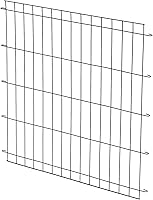
The MidWest 42-inch crate divider panel needs a snug fit across the crate's width for safe installation.
How do you choose between a 30-inch and 36-inch crate?
Choose by your dog's measurements and expected adult size, not by age alone. A 30-inch crate may suit some smaller adult dogs, while a larger dog may need more room.
The Amazon Basics 36-inch wire crate measures 36 x 23 x 25 in. It is intended for pets under 32 x 21 in (length by height), and includes a divider to adjust the internal space.
Compare the crate's listed dimensions with your dog's measurements and confirm your puppy can stand, turn, and lie down. Don't assume that two crates with the same named length have identical usable space.
For breed-specific starting points, see what size dog crate for a Labrador or what size dog crate for a Golden Retriever. Individual dogs vary, so measure yours before choosing.
When does a separate divider panel help?
A separate divider can help if your adult-size crate needs a smaller usable area for a puppy. Match the panel to the exact crate model and make sure it fits snugly.
The MidWest 42-inch crate divider panel fits specified MidWest and New World 42-inch crate models, including iCrate, Life Stages, Ultima Pro, and Ovation models. It's designed to adjust the living area as a puppy grows.
Check the crate model before buying; this panel isn't a universal fit. Follow the crate and divider instructions, and remove your puppy's collar, leash, harness, and clothing while they're crated.
What should you check after choosing a crate?
Check that your puppy can stand, turn around, and lie down without being squeezed. Recheck the fit as your puppy grows.
Set the crate up according to its instructions and choose suitable bedding. Our guide to how to set up a dog crate covers placement and setup, while what to put in a dog crate helps you choose what belongs inside.
Use gradual, supervised crate training, and give your puppy breaks for exercise, water, and bathroom needs. A correctly sized crate is one part of a routine, not a substitute for watching your puppy.
Which puppy crate size should you choose?
For puppy crate size, measure your dog first, then choose a crate that fits the expected adult dog if you can adjust it with a divider. Choose a 30-inch option if its dimensions fit your dog; consider a 36-inch crate when your dog needs more room.
Pick a separate divider only when it matches the crate model. If you're unsure between two sizes, compare the crate dimensions with your dog's measurements before deciding.
Frequently asked questions
What size crate should I get for my puppy?
Choose a crate that gives your puppy room to stand, turn around, and lie down comfortably. Measure your puppy's nose to the base of the tail and floor to the top of the head, then add about 4 inches to each measurement as a starting point.
If buying for adult size, use a divider to limit the space while your puppy is small.
Should a puppy's crate be big enough to grow into?
You can buy a crate sized for your puppy's expected adult size and use a divider to adjust the living area as your puppy grows. Keep the space large enough to stand, turn, and lie down, but avoid leaving a small puppy with a much larger open area.
Check fit again as your dog grows.
How much room should a puppy have in a crate?
A puppy should be able to stand up, turn around, and lie down comfortably. Measure length from nose to the base of the tail and height from the top of the head to the floor.
Add about 4 inches to each measurement as a starting point, then confirm the fit in the crate.
Can a puppy crate be too large?
Yes. A crate with far more room than a young puppy needs can make it easier for the puppy to use one area as a toilet and another as a resting spot.
A divider can reduce the usable space while preserving room to stand, turn around, and lie down.
Adjust it as the puppy grows.