How to Set Up a Dog Crate
To learn how to set up a dog crate, choose a suitable size, secure the frame, and place it in a calm spot. Add a divider or bedding only if it fits your dog and crate.
On this page (10 sections)
- What do you need to set up a dog crate?
- Where should you put a dog crate?
- How do you choose a dog crate size?
- How do you make a wire crate ready for use?
- What should you put inside a dog crate?
- Should you cover a dog crate?
- How do you introduce your dog to the crate?
- What mistakes should you avoid when setting up a dog crate?
- How do you keep a dog crate clean?
- How to set up a dog crate: which options should you choose?
To learn how to set up a dog crate, choose a size that lets your dog stand, turn, and lie down, then secure it in a calm place. Add a correctly fitted divider for a puppy, and introduce the crate in short, positive sessions.
A crate works best as a comfortable resting spot, not a place for punishment. Start with the crate itself, then decide whether your dog needs a divider, bed, or cover.
What do you need to set up a dog crate?
You need a crate that fits your dog, a level location, and a clear path for the door to open. Bedding, a divider, and a cover are optional additions, so choose them only when they suit your dog and the crate.
For a wire crate, follow its assembly instructions and check that every panel and latch is secure. Make sure the tray sits flat, the door opens freely, and no sharp edges or loose parts are exposed.
The MidWest 36-inch single door iCrate is intended for dogs weighing 41–70 lb. It measures 36.5 x 23.25 x 24.75 in and includes a divider panel, leak-proof tray, rubber feet, and carry handle.
This crate suits a medium or large dog that fits its dimensions and a household that wants a folding wire design. Skip it if your dog needs more room, if the single door won't work in your space, or if you need a crate with a top door.
Before buying any crate, measure your dog and compare the measurements with its usable interior space. Follow how to measure a dog for a crate and check the complete dog crate buyer's guide for a broader look at crate types.
Where should you put a dog crate?
Put the crate in a calm part of the home where your dog can rest without being cut off from ordinary household sounds. Choose a spot with airflow, away from direct sun, heaters, drafts, and busy walkways.
A quiet corner of a shared room can give your dog company without constant foot traffic. At night, try a bedroom if your puppy settles better near you; move the crate during the day if another room is more practical.
Place it on a level surface where it won't rock or slide. Keep enough space around it to open the door fully and reach the latches without squeezing past furniture.
For room-by-room placement ideas, read where to put a dog crate in your home. Don't put the crate somewhere just because it's out of sight if that leaves your dog isolated or exposed to heat and drafts.
How do you choose a dog crate size?
Choose a crate with enough interior room for your dog to stand, turn around, stretch out, and lie down naturally. A cramped crate restricts movement, while a much too-large puppy crate may leave space for a sleeping area and a separate toilet area.
Measure your dog's height and length, then compare those measurements with the crate's usable interior dimensions. Check the manufacturer's sizing guidance for the exact model, since outside dimensions and interior space are different.
For a growing puppy, consider a crate that will suit its expected adult size and use a compatible divider to adjust the living area. Read how to choose a dog crate by type, size, and doors before settling on a style or size.
How much space should a puppy have when you set up a dog crate?
A puppy needs room to stand, turn around, stretch, and lie down, but not a large unused section of the crate. Move the divider as your puppy grows so the usable space keeps pace with its size.
The MidWest 42-inch divider panel fits specific MidWest and New World 42-inch crate models, including selected iCrate, Life Stages, Ultima Pro, and Ovation models. It must fit snugly across the crate's width, so confirm the model and fit before use.
This panel suits someone who already has one of the compatible crates and wants to adjust its interior for a growing dog. Skip it if your crate model isn't on the fit list; a divider that doesn't fit securely isn't a safe substitute.
Remove your puppy's collar, leash, harness, and other apparel before crating. For more guidance, see what size crate a puppy needs.
How do you make a wire crate ready for use?
A wire crate is ready when the frame is steady, the tray sits correctly, and the door and latches move freely. Follow the instructions for your model because panel connections and latch designs can vary.
Open and close the door several times before your dog goes inside. Check that the crate stands level and the tray doesn't leave a gap that could catch a paw.
Take out packaging, tools, loose ties, and small parts. If you need to store or move the crate later, follow how to fold a wire dog crate rather than forcing the panels together.
What should you put inside a dog crate?
Start with a clean tray or floor, then add bedding if your dog leaves it intact. A familiar toy may help some dogs settle, but don't leave anything your dog chews apart or could swallow.
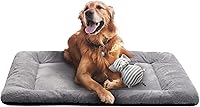
The VERZEY washable crate pad measures 42 x 28 in and has a faux-fur surface with a non-slip backing. It's machine washable and can be dried on low heat.
This pad suits a dog that likes a soft surface and doesn't chew bedding. Skip it for a dog that tears fabric or eats pieces, or if it doesn't lie flat in your crate.
Shake and pat the pad to restore its fluff after unpacking, then wash and dry it before use if you prefer.
Don't add bowls or toys by default. Consider your dog's age, how long it will be in the crate, and any care guidance from your veterinarian.
See what to put in a dog crate for more ideas.
Should you cover a dog crate?
A cover is optional and can provide more privacy for a dog that settles better with less visual activity. Leave airflow clear, and remove the cover if your dog seems uncomfortable.
The MidWest 42-inch crate cover is made from lightweight polyester and uses hook-and-loop tabs. Its side flaps lift to adjust visibility and ventilation.
The cover is designed for most standard 42-inch metal crates. It doesn't fit crates with a top door.
This cover suits an owner whose crate is a compatible standard 42-inch size and whose dog prefers a more enclosed resting area. Skip it if your crate has a top door, the cover openings don't line up with your doors, or your dog dislikes having its view reduced.
Measure the crate's outside dimensions before choosing a cover. Start with a flap raised, then watch your dog and adjust the visibility and airflow.
How do you introduce your dog to the crate?
Let your dog explore the crate before closing the door, then build up to short, calm stays. Praise voluntary entry, and give your dog time to become comfortable with each step.
Leave the door open while your dog sniffs or steps inside. A safe treat or toy near the entrance can encourage exploration; move it farther in as your dog gets comfortable.
Once your dog enters willingly, close the door for a brief moment while you stay nearby. Open it before your dog becomes distressed, then increase the time in small steps.
Don't use the crate as punishment or leave a dog crated longer than it can comfortably manage. Puppies and adult dogs may need different routines, and a dog with separation concerns may need help from a qualified professional.
What mistakes should you avoid when setting up a dog crate?
The most common mistakes are choosing a poor size, placing the crate in an uncomfortable spot, and adding items the dog can chew or swallow. Check each setup choice from your dog's point of view before using the crate.
Avoid these problems:
- Guessing the size: measure your dog and check interior space, not just the crate's outside dimensions.
- Using an incompatible divider: confirm the exact crate model and ensure the panel fits snugly.
- Blocking airflow: keep covers and bedding clear of vents and door openings.
- Adding too much too soon: start with a simple surface, then add bedding or a cover only if your dog responds well.
- Leaving hazards inside: remove collars, leashes, harnesses, packaging, loose ties, and anything your dog could swallow.
- Forcing long sessions: build up time gradually and keep the crate a calm resting place.
How do you keep a dog crate clean?
Remove debris, wash bedding as needed, and clean the tray with a pet-safe method. Let the tray and other cleaned parts dry before putting the crate back into use.
During routine cleaning, check the corners, latches, tray, divider, and bedding. Replace damaged items that could snag your dog or be torn apart.
For the full cleaning routine, read how to clean a dog crate. Recheck the divider's position as your puppy grows so the usable space remains appropriate.
How to set up a dog crate: which options should you choose?
Choose the crate first, then add only the pieces that solve a real need. The MidWest 36-inch iCrate suits a dog that fits its size and a home that wants a folding wire crate; the 42-inch divider suits only owners with a compatible crate.
Add the washable pad if your dog uses bedding safely and the pad fits flat. Choose the cover if your dog settles with more privacy and the cover fits the crate without blocking doors or airflow.
Finish by checking the frame, door, latches, tray, divider, bedding, and ventilation. For a puppy, use the puppy crate size guide to choose the starting space, then adjust it as your dog grows and build up crate time in short, positive sessions.
Frequently asked questions
Where should I put a dog crate?
Put the crate in a quiet part of your home where your dog can rest and still hear normal family activity. Avoid direct sun, drafts, heaters, and busy doorways.
A bedroom may help a puppy settle at night, while a shared living area can work during the day.
Should I put a bed in a dog crate?
A washable pad can make the crate more comfortable if your dog leaves bedding intact. Start with a simple surface and watch how your dog responds.
Remove the pad if your dog tears or eats pieces, or seems too warm.
Should I cover my dog's crate?
A cover is optional and may suit a dog that settles with less visual activity. Leave airflow open and check that your dog remains comfortable.
Start with a side flap raised, then adjust based on your dog's response.
Don't use a cover that blocks a crate door or top opening.
How do I make a crate smaller for a puppy?
Use a divider made for your exact crate model to limit the puppy's space while leaving room to stand, turn around, and lie down. Check the divider's fit and adjust it as your puppy grows.
Remove collars, leashes, and harnesses before crating.